%201.png)
Industries / Warehouse, Logistics & Distribution
Loss prevention, access control and workforce safety don't stop when peak season hits or hundreds of contractors move through your facility each day. We identify the root causes of security vulnerabilities, then design practical solutions that protect people, assets and operations without adding unnecessary complexity.
Most warehouse and distribution security problems fall into six categories: theft and asset loss, unauthorised access, workforce safety, operational disruption, inconsistent standards across sites, and disconnected systems that limit visibility and response.

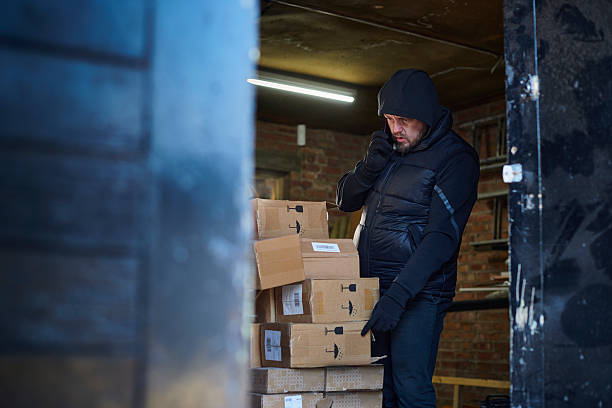
Loss doesn't only walk in the front door. Much of it moves through loading docks, between shifts, or with people who already have legitimate access.

Drivers, contractors, casual labour and visitors all move through your site — every one of them is a potential gap if access isn't actively managed.

Forklifts, loading zones, night shifts and manual handling make distribution sites some of the highest-risk workplaces to get security and safety wrong.

Security that slows trucks at the gate or holds up dispatch isn't a solution — it's a new problem. Any measure has to work at the pace of your throughput

A different provider, process or standard at every site makes risk harder to see clearly — and harder to hold anyone accountable for.

Different vendors, different systems, different reports. What's missing usually isn't more security — it's one system that actually talks to itself.

On most distribution sites, loss and inconsistency rarely come from one dramatic failure. They come from access points that were never designed for today's volume of drivers and contractors, security measures added site by site instead of as one system, and reporting that shows what happened after the fact rather than what's changing in real time. The result is a site that looks secure on paper but leaks risk between the gaps.
Most organisations can’t afford to pause operations while security issues are addressed. Warehouses and distribution centres need security solutions that work within existing workflows, support high volumes of employees, contractors and drivers, and integrate with current systems. Any improvement must strengthen asset protection and operational control without creating unnecessary complexity or impacting productivity.
The most effective warehouse security programs combine people, technology and process as a single operating model rather than relying on any one control alone. The right approach depends on your site's risk profile, operating hours, asset value, workforce movements and operational requirements.

01
Before we recommending a solution, we access how your site actually operates — dock flow, shift patterns, existing systems, past incidents — This allows us to identify vulnerabilities, understand risk exposure and design a security strategy aligned to the way your facility operates.
02
Our security officers and mobile patrols provide a visible security presence focused on access control, asset protection, perimeter security and incident response. Resourcing is tailored to your operational profile, ensuring security coverage can adapt to changing volumes, peak periods and evolving risk
Explore about Guarding & Mobile Patrols >
03
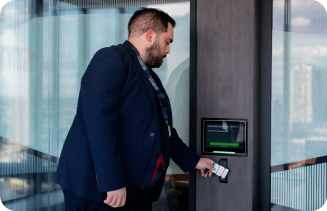
CCTV, access control and Grade A1 monitoring working as as a connected security ecosystem. By integrating technology, monitoring and response, organisations gain greater visibility, stronger control and faster escalation when security incidents occur.
Explore about Monitoring & Electronic Systems >For sites running 24/7 or covering large yards, some clients are starting to add autonomous patrol alongside guards and cameras — worth a look if your site has outgrown what fixed cameras alone can cover.

01
Understand the site before discussing technology — objectives, operations, risk, people, budget and timelines.
02
Bring operations, leadership, risk, technology and budget into agreement on what's realistic.
03
Build the right-fit solution — not the biggest one — combining people, technology, AI, robotics, process and training as needed.
04
Turn the plan into practical outcomes: implementation, adoption, governance and change management, with minimal disruption.
05
Keep reviewing performance, ROI and effectiveness so the solution stays fit for purpose as the site changes.
Can't find what you're looking for? Contact our team to discuss your specific site and compliance requirements.
Security doesn't stop at go-live. We continue reviewing performance, incident data, compliance and technology fit as your site, stock and season change — so the plan stays right for where your business is now, not where it was when we started.
Talk to our team about what's actually happening across your sites — no obligation, no generic proposal.

.svg)