%201.png)
Industries / Commercial Real Estate
Tenant safety, after-hours access and common area risk don't stop when the building empties out or a lease turns over. We identify the root causes of security vulnerabilities across your property, then design practical solutions that protect tenants, visitors and asset value without adding unnecessary complexity.
Most commercial property security challenges fall into six categories: after-hours and contractor access, common area and lobby security, multi-tenant coordination, vacant space and lease turnover risk, car park and loading dock security, and inconsistent standards across a property portfolio.

Cleaning contractors, maintenance workers and trades access the building outside standard hours, when supervision is lowest and unauthorised access, equipment theft and vandalism are hardest to catch.

Lobbies, lifts, stairwells and shared amenities are used by every tenant's staff and visitors, but often sit outside any single tenant's responsibility to secure.

Each tenant may have its own access requirements, visitor policies and security expectations, and a base building has to accommodate all of them without one tenant's risk becoming another's problem
.svg)
Vacant floors and suites between leases are frequently under-secured, and fit-out periods bring extra contractor traffic and materials on-site with no permanent occupant to notice something wrong.

Car parks and loading docks are typically the least supervised parts of a commercial property, and a common entry point for unauthorised access.
.svg)
A different security standard, provider or response time at every site makes risk harder to see clearly across a network and harder to report on for compliance purposes.
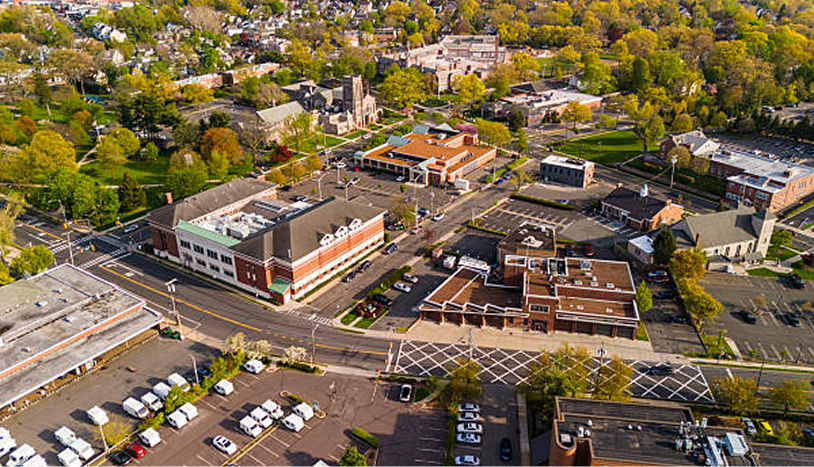
Most base building security failures are not the result of a single breach. They develop when access control is managed tenant by tenant instead of as one coordinated system, when common areas are treated as no one's responsibility because they belong to everyone, and when contractor and after-hours access isn't tracked as closely as tenant staff access. Over time, these gaps create opportunities for unauthorised access, theft and liability exposure that often aren't detected until an incident forces a review.
Property owners and managers can't restrict access in ways that inconvenience legitimate tenants, and can't unilaterally change security arrangements that affect leases already in place. Any change has to satisfy owners, tenants, body corporates and facility management at the same time, often across a building with different systems and expectations inherited from different eras of the property's life.
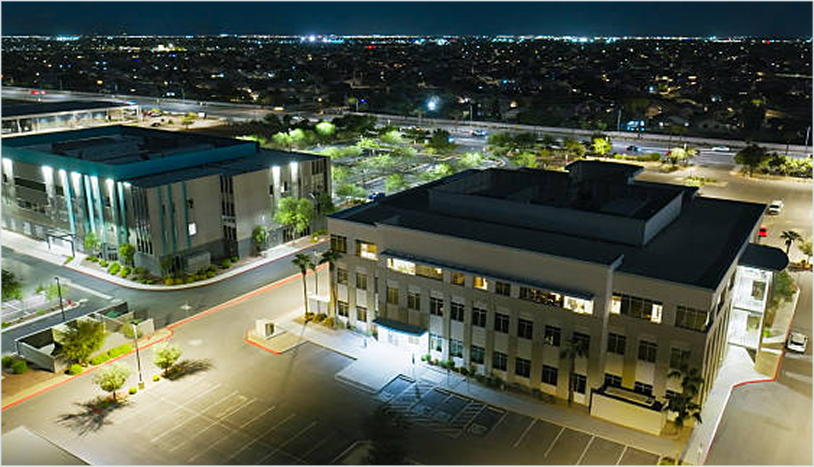
The right mix is almost always a front-of-house security presence, access control and electronic monitoring working together — not one instead of the other. Which combination, and how much of each, depends on your property's tenancy mix, hours and risk profile.
01
Before we recommend anything, we assess how your property actually operates — tenant mix, access patterns, after-hours traffic, past incidents — so the plan fits the building, not the other way around.
02
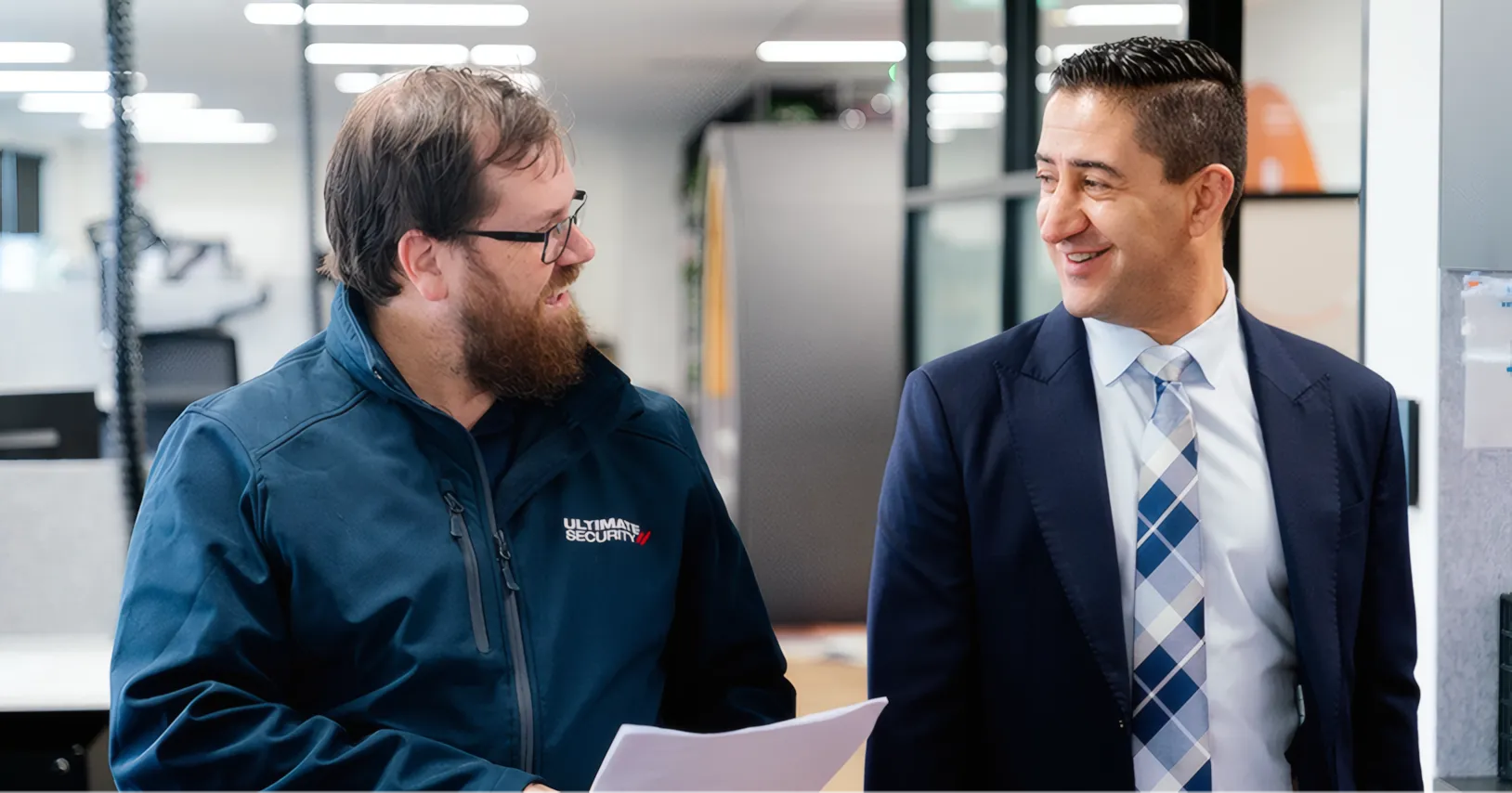
In a commercial property, a security officer's most valuable skill is often front-of-house judgement — knowing who belongs and who doesn't, without becoming an obstacle to legitimate tenants and visitors. Officers deployed to our commercial property sites are trained specifically for base building environments, including:
- Verifying visitor and contractor identity and purpose without creating friction for regular tenant traffic.
- Recognising after-hours anomalies — unfamiliar people, unusual movement of equipment or materials, doors propped open.
- Coordinating with multiple tenants, body corporates and facility managers rather than a single point of contact.
- De-escalation and customer service for tenant, visitor and public interactions in shared spaces.
This is what separates a security presence from a commercial property officer who protects the whole building, not just the front desk — training a generic guarding contract doesn't include.
Officers and mobile patrols are also sized to your property's tenancy mix, hours and risk — covering lobbies, common areas, car parks and after-hours rounds without a fixed cost that doesn't flex with occupancy.
.jpg)
.jpg)
03
CCTV, access control and duress alarms are only as strong as what's watching them. Every alert from your property is monitored through Ultimate's two nationally certified Grade A1 monitoring centres — the highest monitoring centre accreditation available in Australia — rather than a single control room. For a commercial property, that matters in specific ways:
- Genuine redundancy — if one centre is affected by a power outage, network fault or local incident, the second centre takes over monitoring without a gap in coverage.
- Faster response under load — a fire panel, duress alarm and after-hours intrusion alert don't queue behind each other if they fire at once.
- One national standard — across a single property or an entire portfolio, every alert is handled to the same accredited standard.
- True 24/7 coverage — after-hours and weekend incidents are monitored continuously, not dependent on one site's staffing.
For a commercial property, that redundancy is the difference between an after-hours intrusion being caught in real time and one going unnoticed until the next business day.
CCTV, access control and alarms work as one system through this monitoring backbone, so a gap in one part of the building doesn't rely on someone noticing it in another.
Some commercial properties are exploring indoor and outdoor patrol robots for large lobbies, car parks and grounds where consistent overnight coverage is hard to staff — worth a look for larger sites or campus-style properties.

01
Understand the property before discussing technology — tenancy mix, access patterns, risk, budget and timelines.
02
Bring ownership, facility management, tenants and budget into agreement on what's realistic.
03
Build the right-fit solution — not the biggest one — combining people, technology, AI, robotics, process and training as needed.
04
Turn the plan into practical outcomes: implementation, adoption, governance and change management, with minimal disruption to tenants and building operations
05
Keep reviewing performance, ROI and effectiveness so the solution stays fit for purpose as the tenancy mix and risk profile change.
Can't find what you're looking for? Contact our team to discuss your specific site and compliance requirements.
Security doesn't stop at go-live. We continue reviewing incident data, access patterns, tenancy changes and technology fit as your property, tenant mix and risk profile change — so the plan stays right for where your portfolio is now, not where it was when we started.
Talk to our team about what's actually happening across your sites — no obligation, no generic proposal.

.svg)