%201.png)
Industries / Education
Student and staff safety, visitor access and after-hours vulnerability don't pause for term time or a busy campus. We identify the root causes of security vulnerabilities across your school or campus, then design practical solutions that protect people and meet duty of care obligations without adding unnecessary complexity.
Most education security challenges fall into six categories: student and staff safety, visitor and access management, lockdown and emergency response, after-hours vulnerability, duty of care and compliance, and consistency across multiple campuses or sites.

Four in ten Australian school principals report experiencing workplace violence in the past year, and more than seven in ten schools report at least one incident of violence or crime on site — security has to address people risk, not just property.

Open, welcoming campuses and controlled access aren't naturally compatible — schools need to manage parents, contractors and visitors without turning the gate into a barrier to normal school life.

A lockdown has to be actionable in seconds, not minutes — locking every door individually while something is actively happening isn't a plan, it's a gap.

Empty campuses overnight and on weekends are a common target for vandalism and break-ins, particularly where valuable equipment, labs or IT infrastructure are on site.

Schools carry a clear duty of care to students and staff, and that duty extends to demonstrating the security measures in place, not just having them.
.svg)
A different security standard, provider or process at every campus makes risk harder to see clearly across a school group or university, and harder to report on to a board or council.
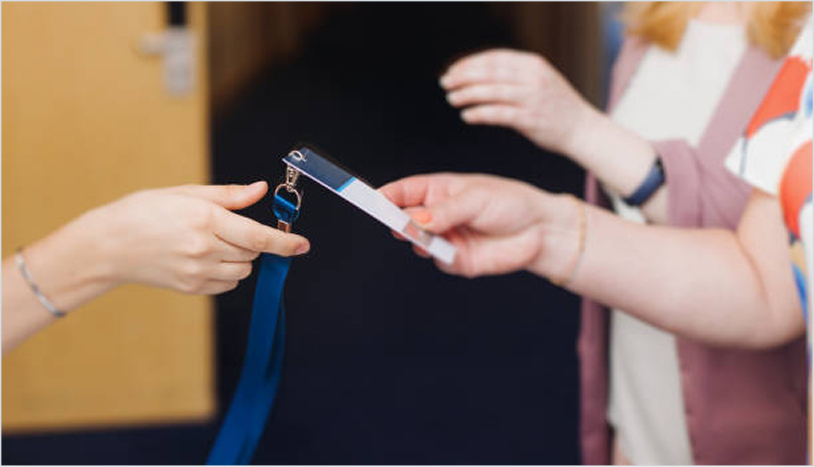
Most incidents at schools and education campuses are not the result of a single dramatic failure. They develop when visitor and access management relies on manual sign-in rather than a coordinated system, when lockdown procedures exist on paper but haven't been tested as something staff can actually execute under pressure, and when after-hours security is treated as an afterthought to daytime supervision. Over time, these gaps show up as incidents that escalate because the response wasn't as fast, or as practiced, as the plan assumed.
Schools can't turn a welcoming campus into a locked facility without damaging the environment they're trying to provide, and can't justify security measures that make students, staff or parents feel like the school itself is the risk. Any approach has to satisfy leadership, staff, parents and often a school board or department at the same time, usually within a tightly constrained public or not-for-profit budget.
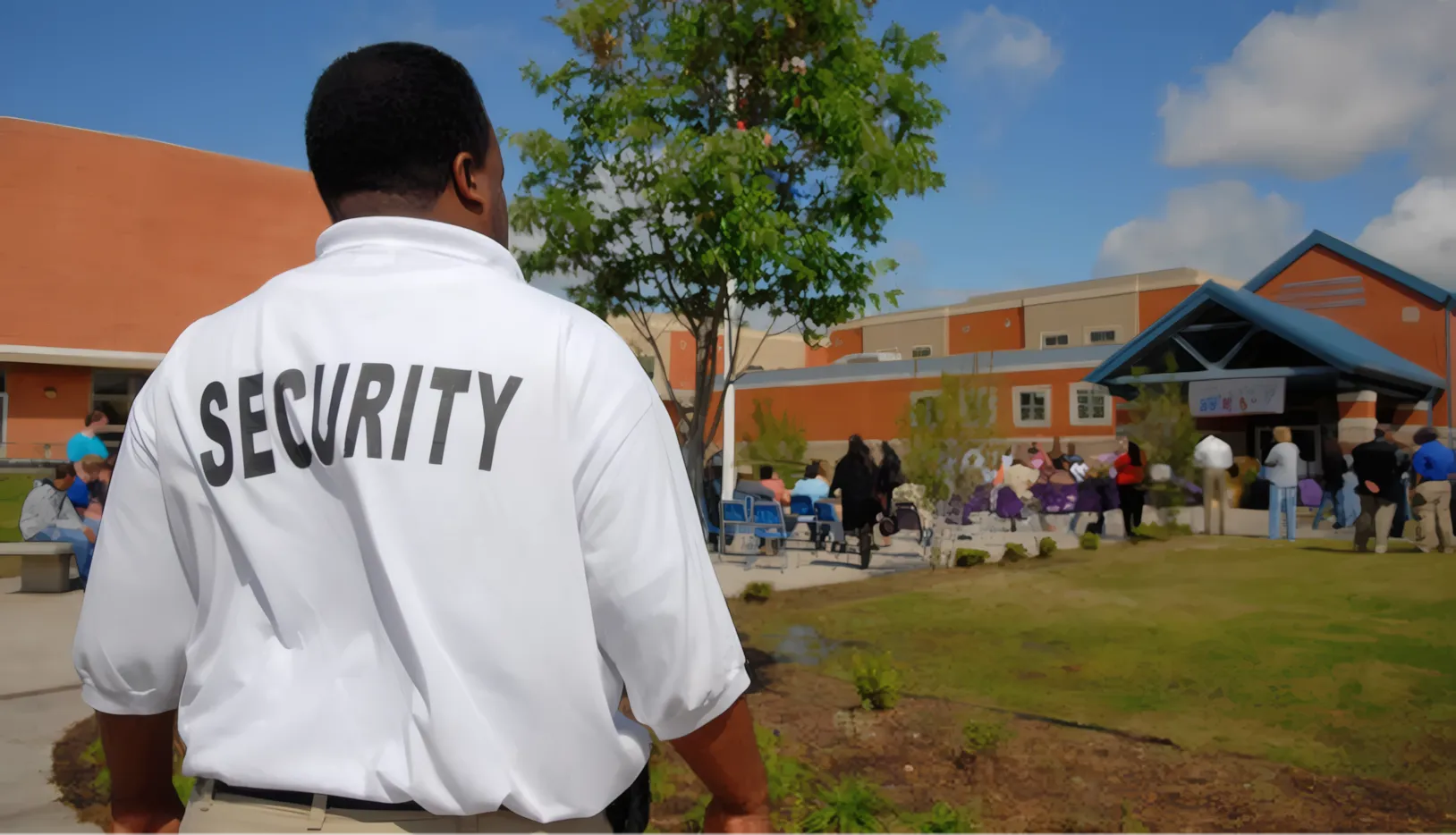
The right mix is almost always access control, a visible and approachable security presence, and electronic monitoring working together — not one instead of the other. Which combination, and how much of each, depends on your campus' size, age group and layout.
01
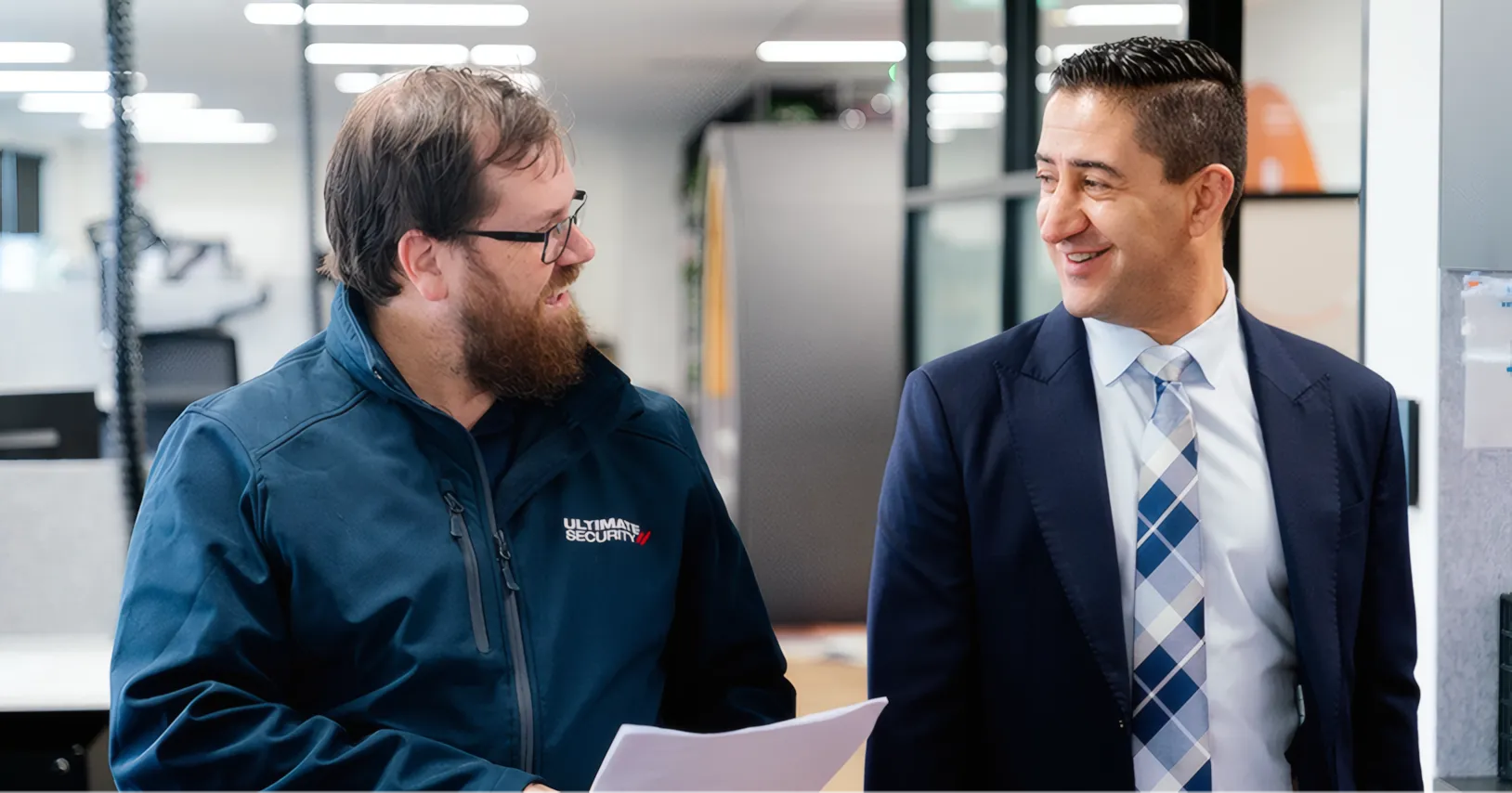
Before we recommend anything, we assess how your school or campus actually operates — access points, visitor flow, past incidents, lockdown readiness — so the plan fits how the campus is actually used, not the other way around.
02
On a school or education campus, a security officer's most valuable skill is often approachability — protecting the site without making it feel like one. Officers deployed to our education sites are trained specifically for school and campus environments, including:
- Working within child safety and working-with-children requirements, not just general site security protocols
- Managing visitor and parent access at pick-up, drop-off and events without creating bottlenecks or friction
- Recognising and responding to early warning signs among students and staff, with de-escalation as the first response
- Supporting lockdown and emergency procedures as a practiced, rehearsed response, not a paper plan
This is what separates a security presence from an education security officer who understands duty of care in a school environment — training a generic guarding contract doesn't include.
Officers and mobile patrols are also sized to term dates, events and campus hours — covering gates, grounds and after-hours rounds without a fixed cost that doesn't flex with the school calendar.

03
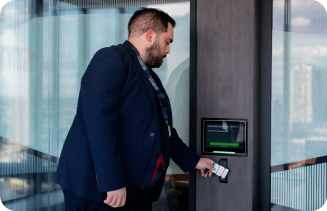
CCTV, access control and duress alarms are only as strong as what's watching them. Every alert from your school or campus is monitored through Ultimate's two nationally certified Grade A1 monitoring centres — the highest monitoring centre accreditation available in Australia — rather than a single control room. For a school or campus, that matters in specific ways:
- Genuine redundancy — critical for a lockdown or duress alert specifically. If one centre is affected by an outage, the second takes over monitoring without a gap in coverage.
- Faster response under load — multiple simultaneous alerts during an emergency don't queue behind each other.
- One national standard — across a single school or an entire school group or university, every alert is handled to the same accredited standard.
- True 24/7 coverage — after-hours, weekend and holiday periods are monitored continuously, not dependent on term-time staffing.
For a school, that redundancy is the difference between a lockdown or duress alert being received in seconds and one waiting on a system with a single point of failure.
CCTV, access control and alarms work as one system through this monitoring backbone, so a gap in one part of the campus doesn't rely on someone noticing it in another.
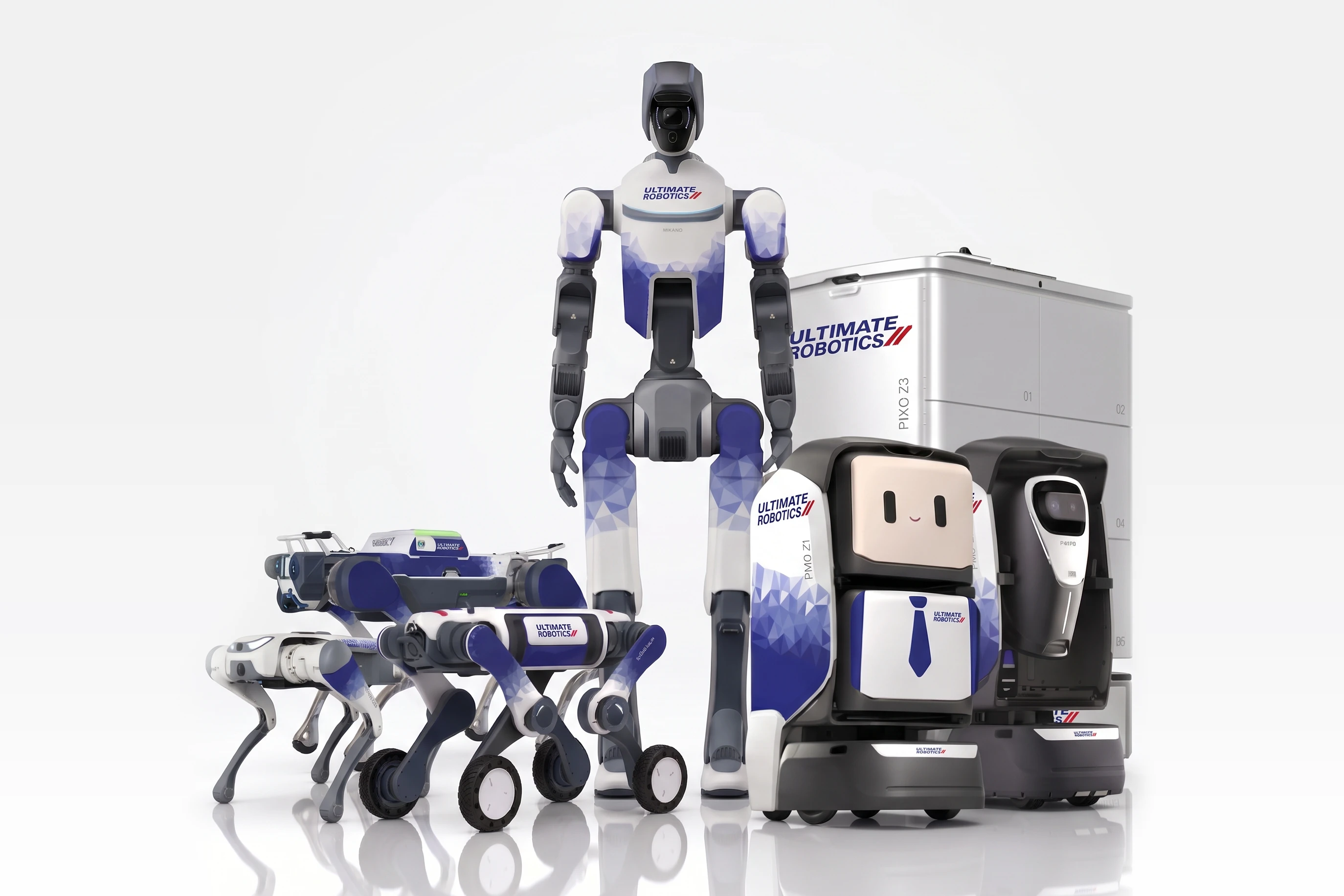
Some larger campuses are exploring outdoor patrol robots for grounds and perimeter coverage outside school hours — worth a look for larger sites with extensive outdoor grounds
01
Understand the campus before discussing technology — access patterns, risk, people, compliance, budget and timelines
02
Bring school leadership, operations, compliance, risk and budget into agreement on what's realistic.
03
Build the right-fit solution — not the biggest one — combining people, technology, AI, robotics, process and training as needed.
04
Turn the plan into practical outcomes: implementation, adoption, governance and change management, with minimal disruption to the school day.
05
Keep reviewing performance, ROI and effectiveness so the solution stays fit for purpose as the campus and enrolment change.
Can't find what you're looking for? Contact our team to discuss your specific site and compliance requirements.
Security doesn't stop at go-live. We continue reviewing incident data, lockdown readiness, compliance requirements and technology fit as your campus, enrolment and risk profile change — so the plan stays right for where your school is now, not where it was when we started.
Talk to our team about what's actually happening across your sites — no obligation, no generic proposal.

.svg)